 Documentation v0.10
Upload a model
Selecting the file
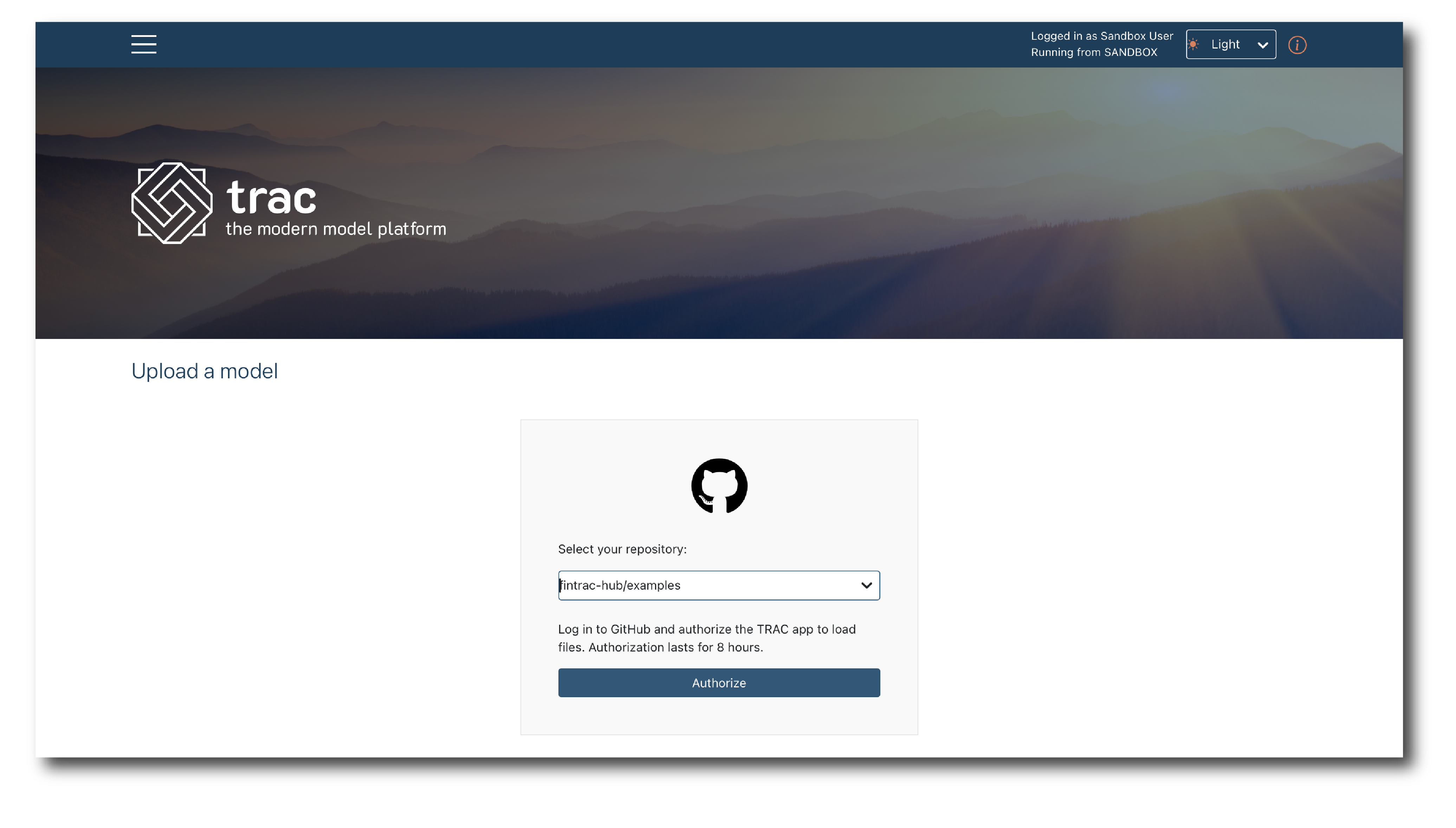
Models are imported from a repository. First select the repository from the drop-down, then click ‘Authorize’. You will be asked to provide credentials (see View & manage tenant resources).
Note
If a repository is missing there may be an issue with resources set-up (View & manage tenant resources).
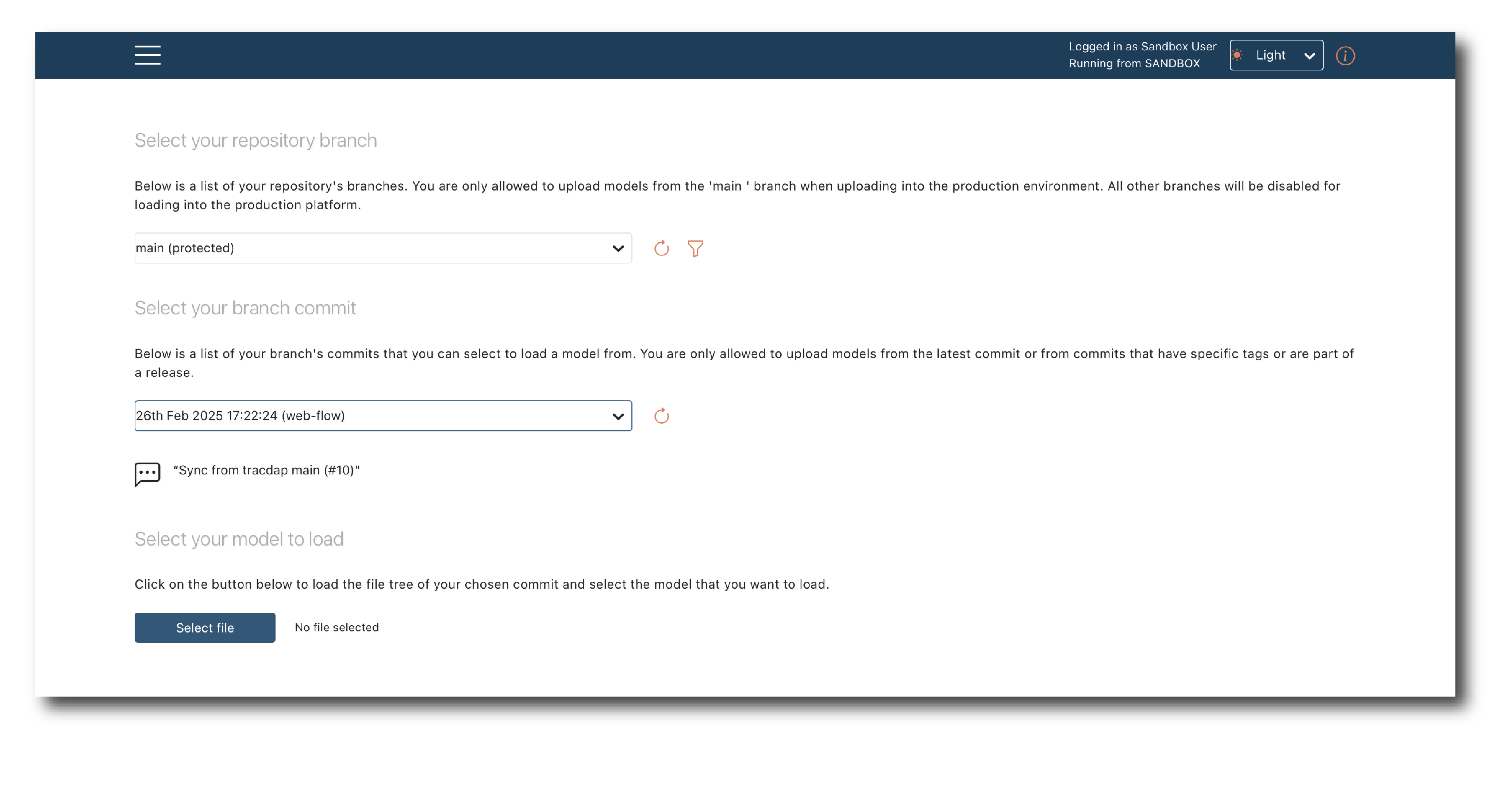
Once authorized, select the branch and commit and then click ‘Select file’, to open a pop-up showing the file structure and available models.
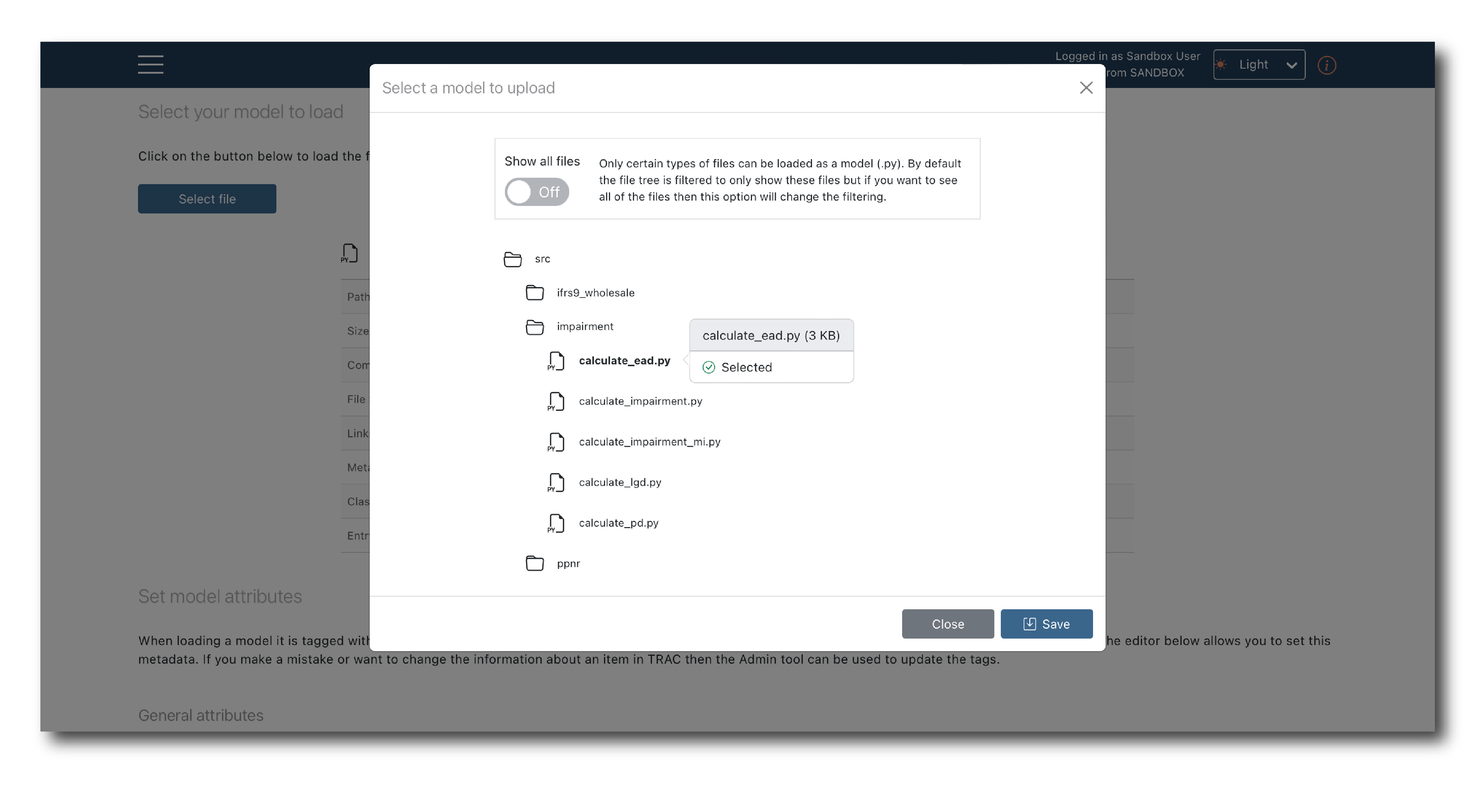
Models are uploaded one at a time. Pick a file and hit ‘Save’.
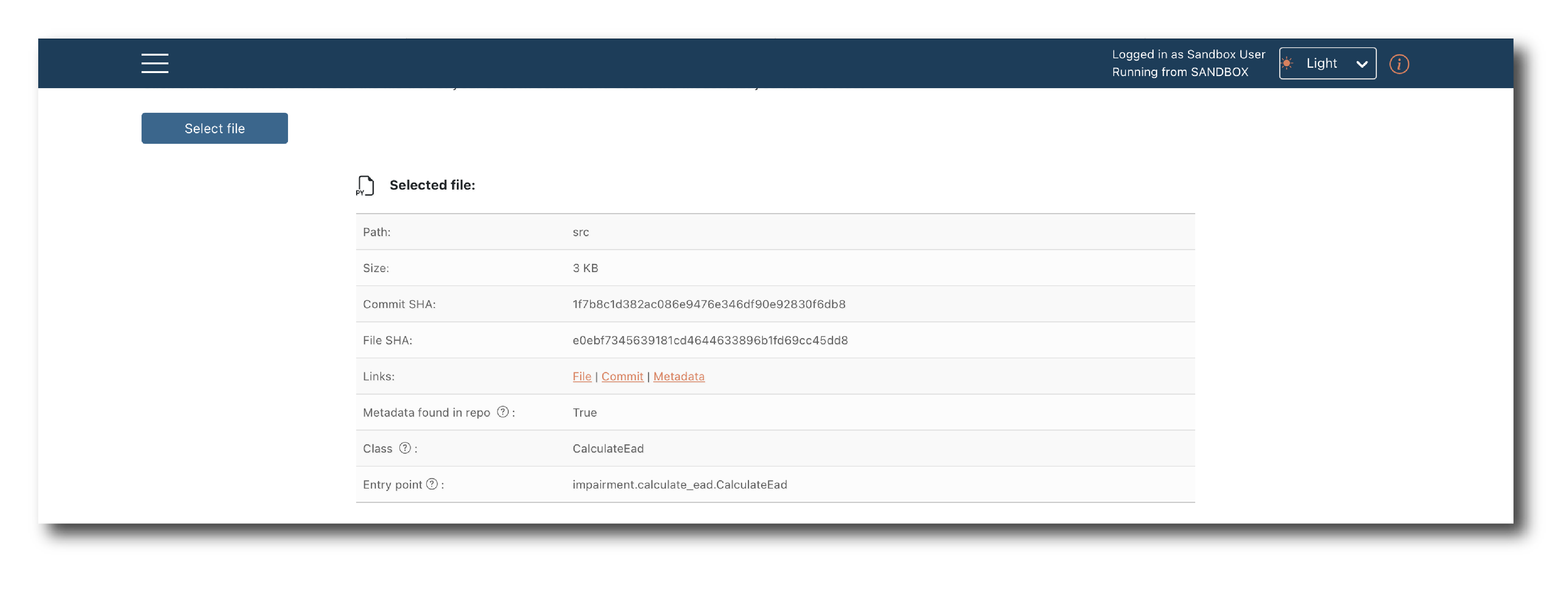
The pop-up should now close with your target model selected and some system generated tags displayed.
Saving the model
To complete the upload, first assign the tags.
A model can be imported as a new object or as a new version of an existing object. To upload as a new version of an existing model object check that the version match toggle is on and click ‘Upload model’.
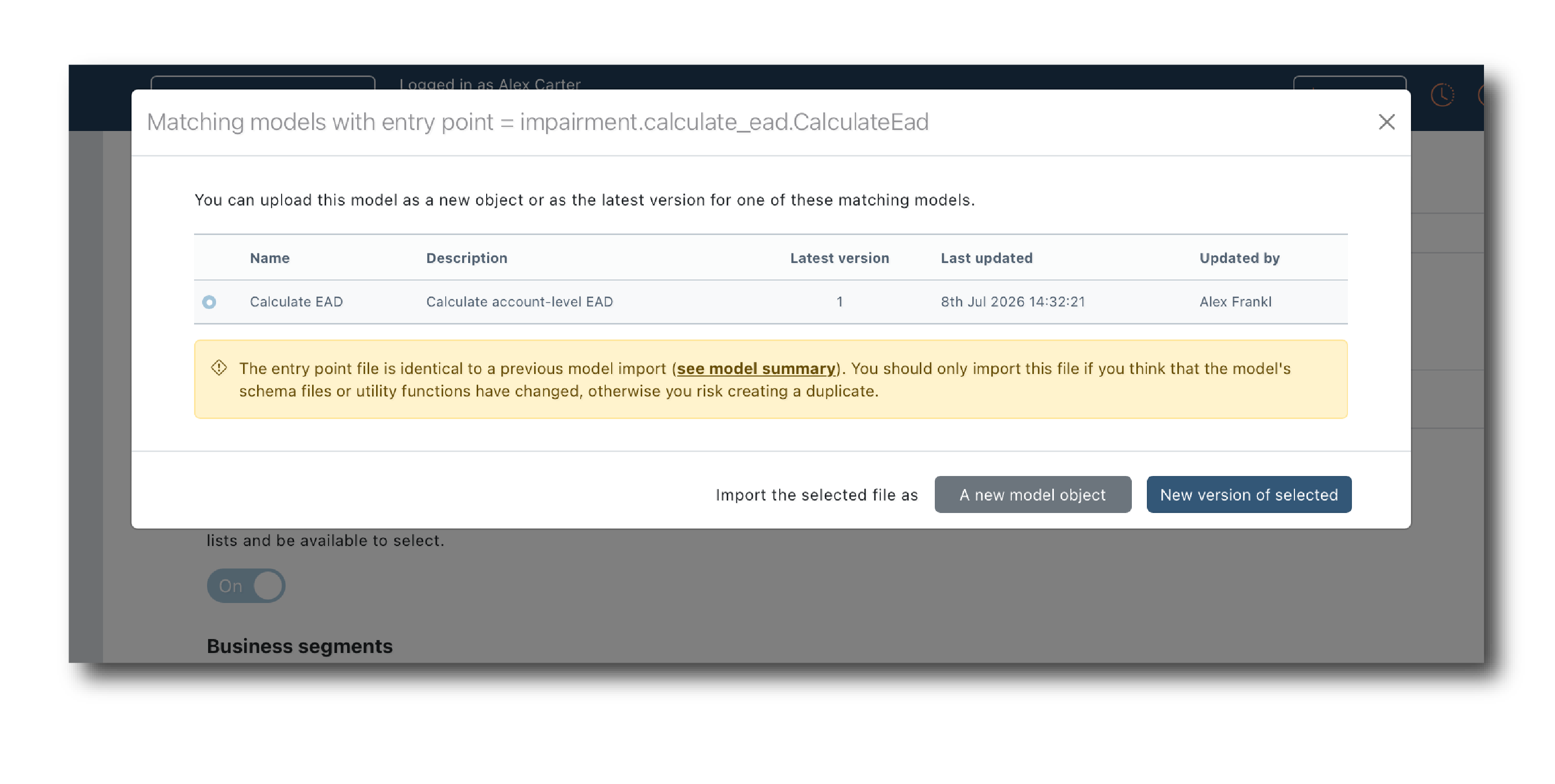
If any models are found that could be versioned using the selected import you will be allowed to select the object and click ‘New version of selected’.
Note
To be imported as a new version of an existing model it must be the same repository and entry point but loaded from a different commit. The modal will show all existing objects which meet these criteria.
Success or failure
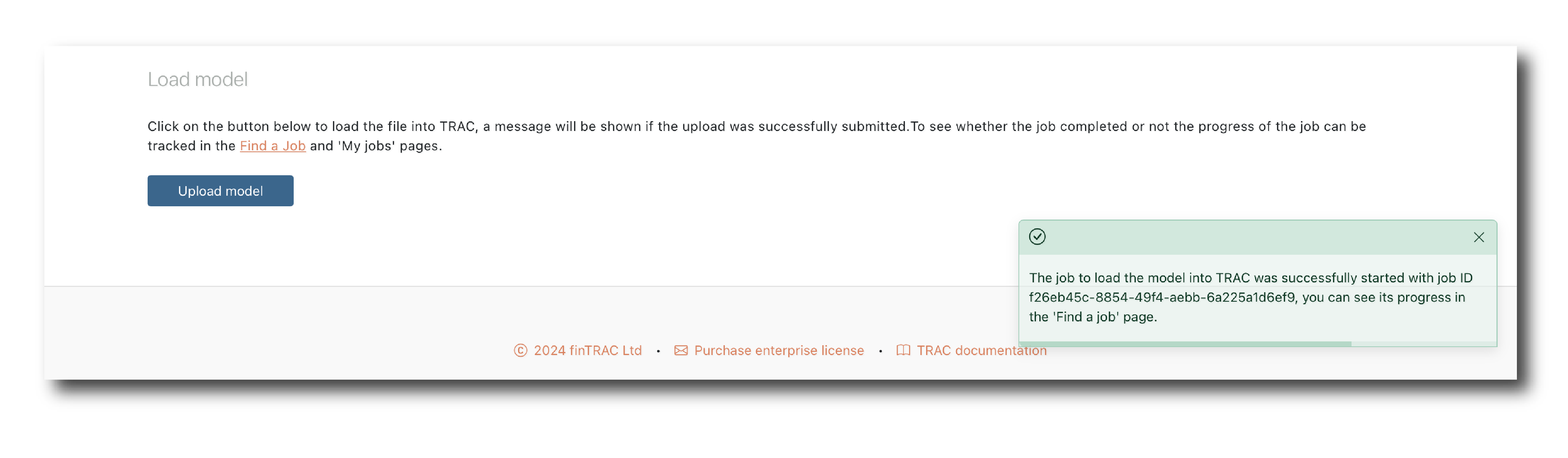
A pop-up should tell you that ImportModel job has started but will not disclose its outcome, so navigate to the search page to check its status (search for Jobs) or find the model.
If the job fails click into the job summary to see the error message.
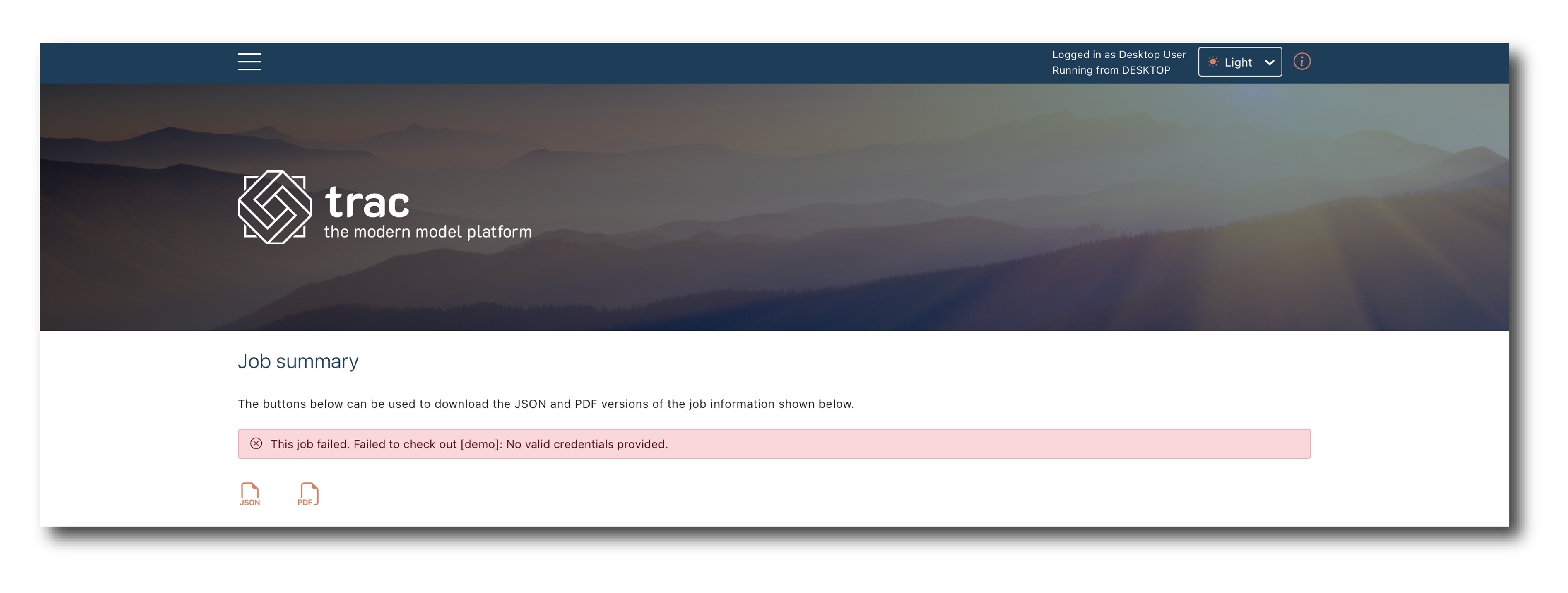
The most common issues relate to credentials when importing from a private repository. Go to the resource manager and edit the repo definition, making sure the github token is set if you have this issue.