 Documentation v0.10
Upload data
Note
Fairly large data files (multiple GB) can be loaded via the UI, in .xlsx or .csv format. In professional or enterprise deployments, data can also be imported using an ImportData job.
File selection
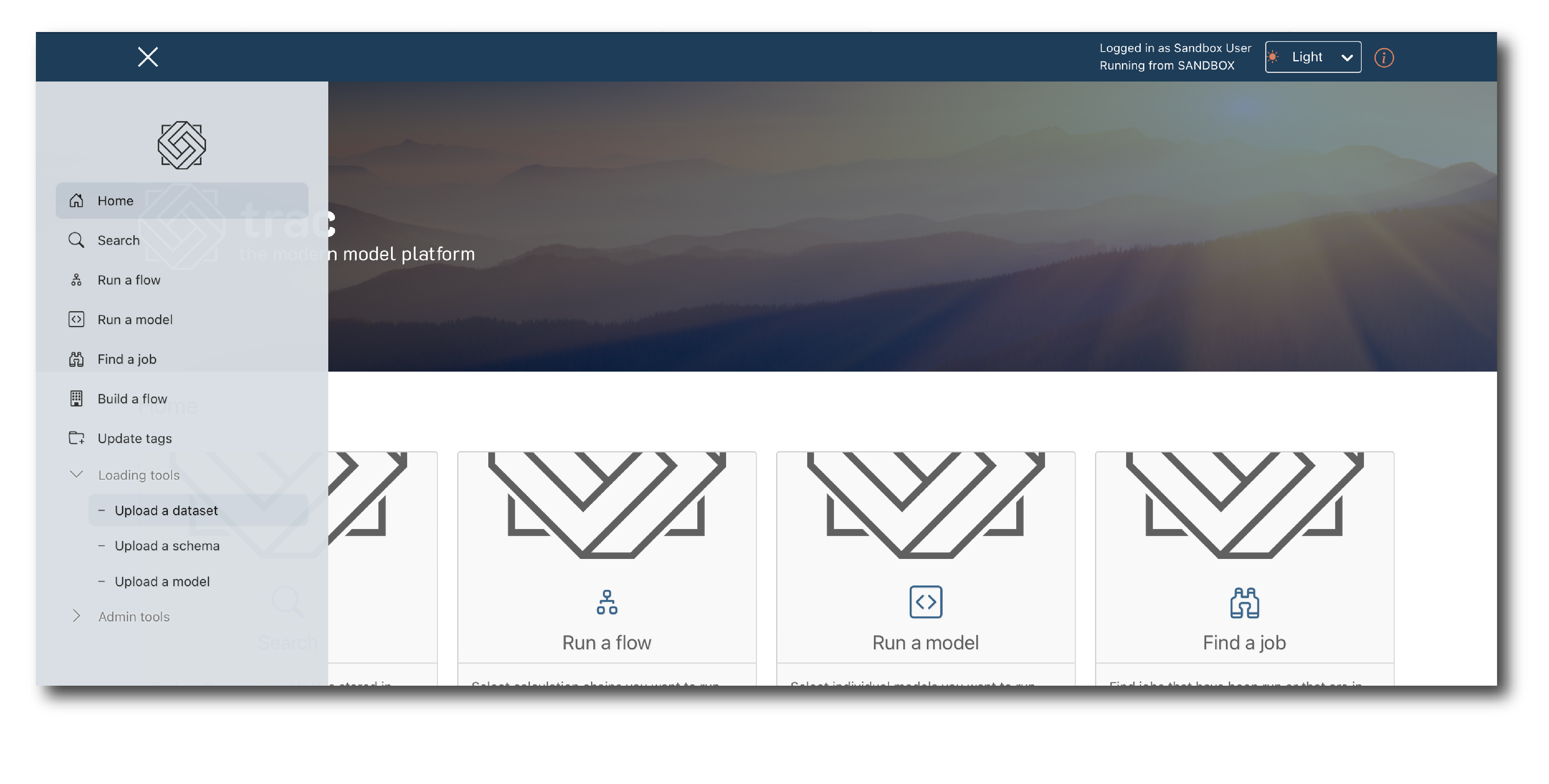
Select ‘Upload a data set’ from either the homepage or the main drop-down menu.
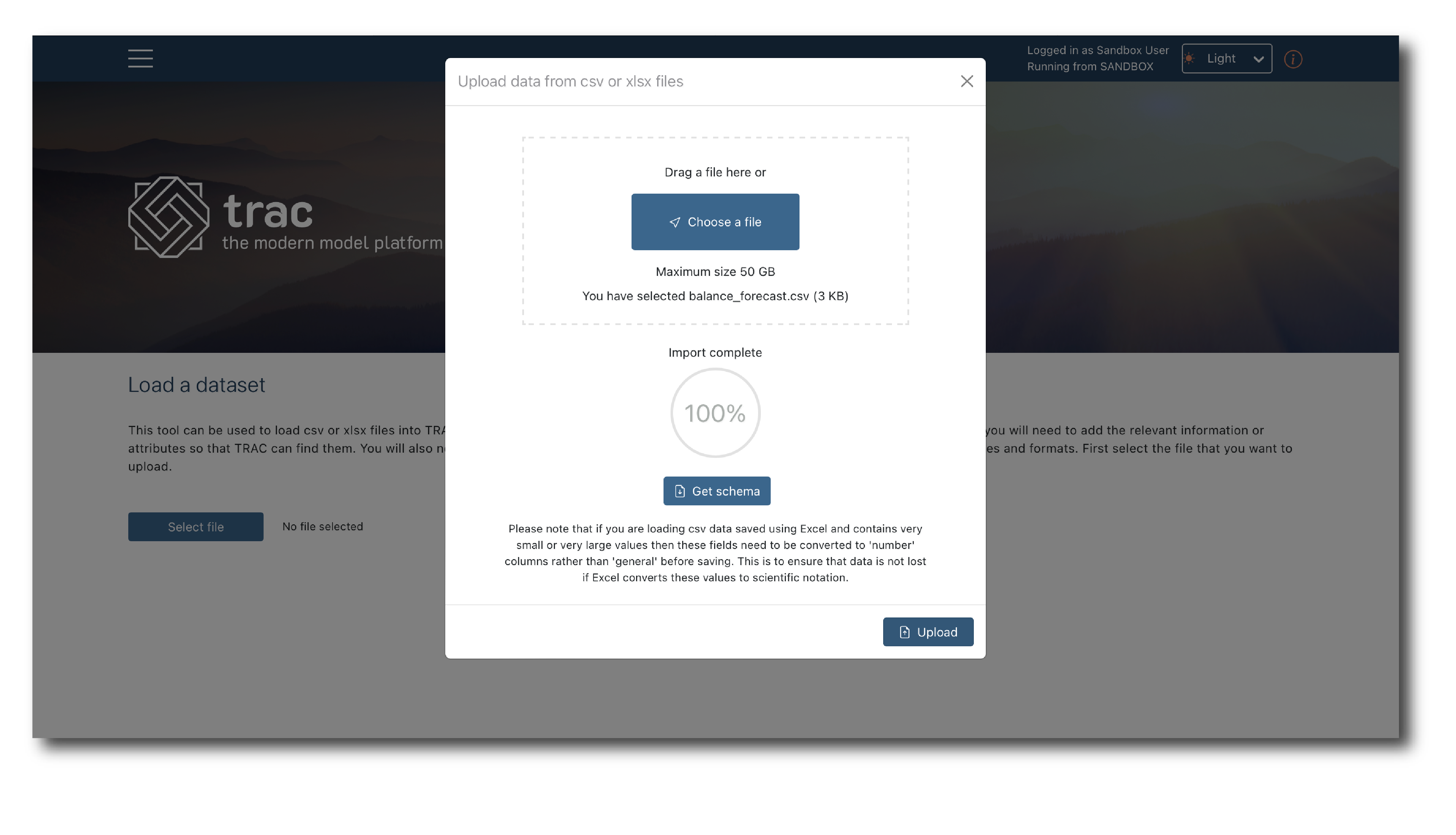
Select a file, click ‘Get schema’ and once you see ‘Import 100% complete’ click ‘Upload’.
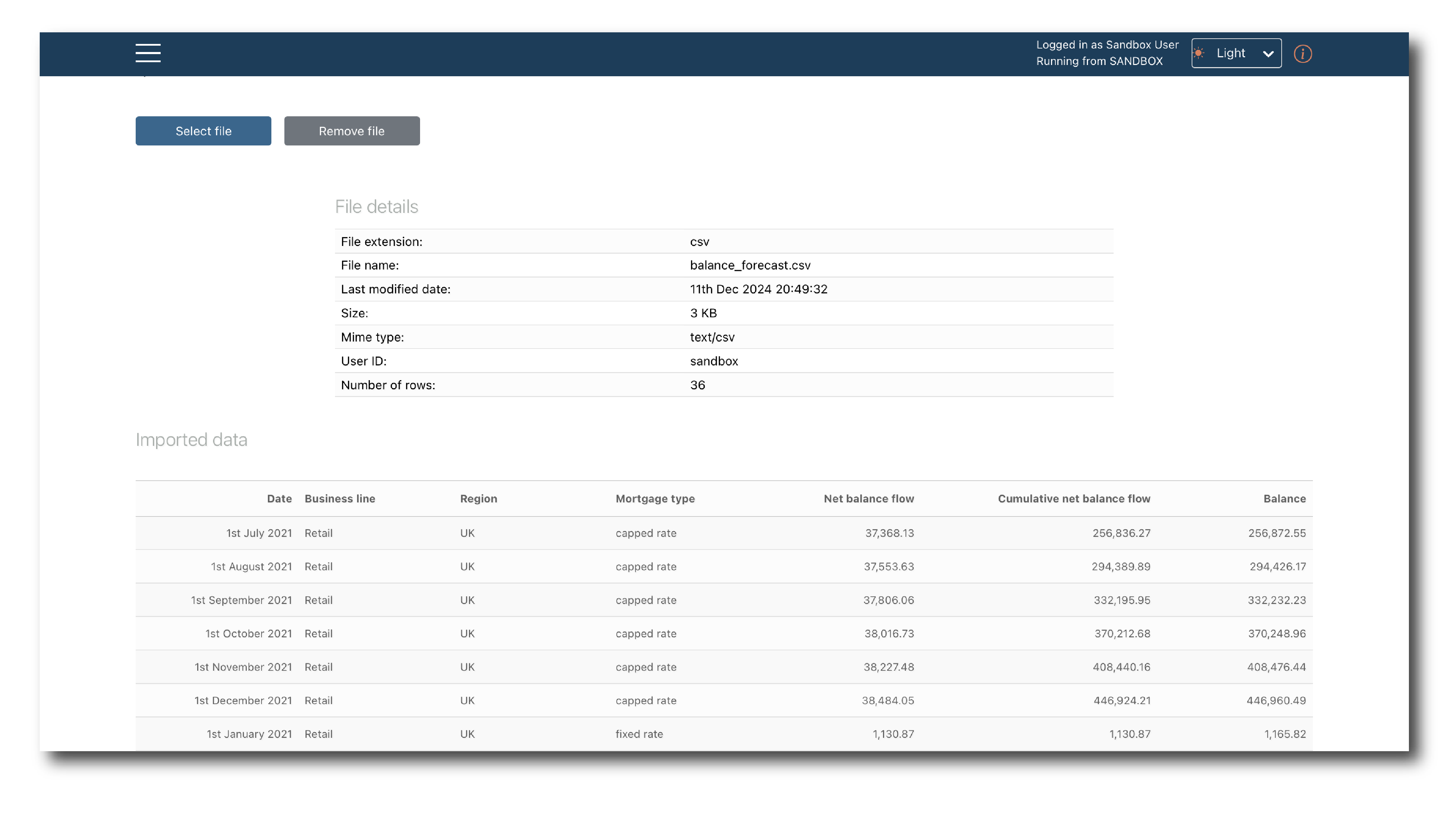
The file has been selected but to complete the import you need to review and label it. The top of the page shows the selected file with the option to preview the first 1,000 rows.
Assigning a schema
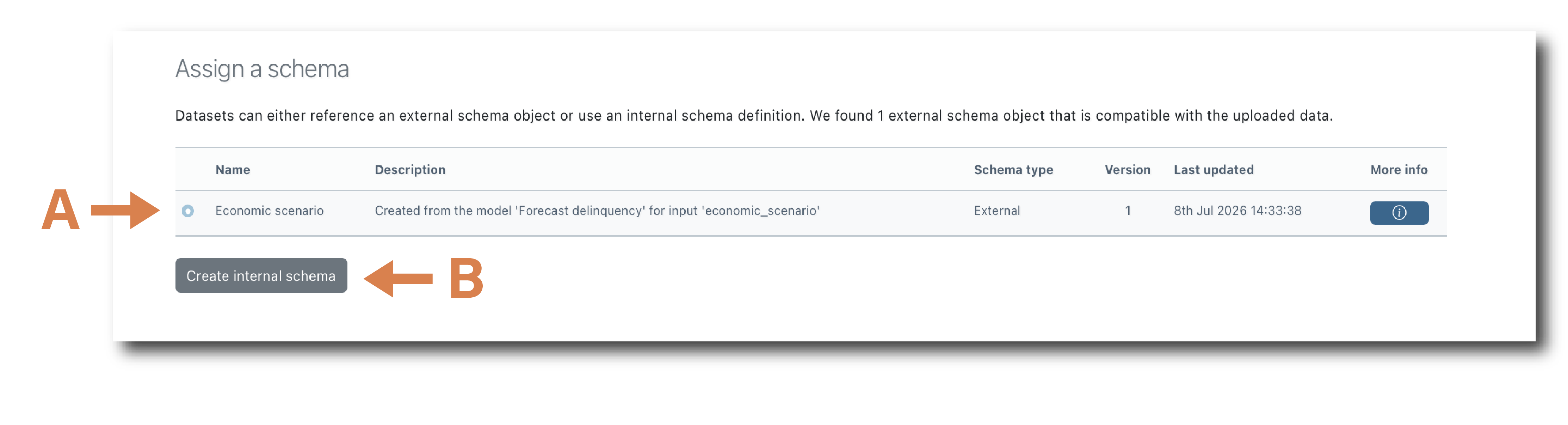
Every trac dataset is either associated with an external schema object or contains its own internal schema definition. If your selected file matches one or more existing schemas you will be given the option to
Confirm association to selected schema object
Use the schema generator to create an internal schema definition for the uploaded dataset
Note
For large, complex data sets, it is generally better to use a schema object because the inferred schema only considers the first 100 rows and the inference isn’t foolproof.
Saving the file
You must tag the data (Name, Key, Description, Search Y/N) to complete the upload.
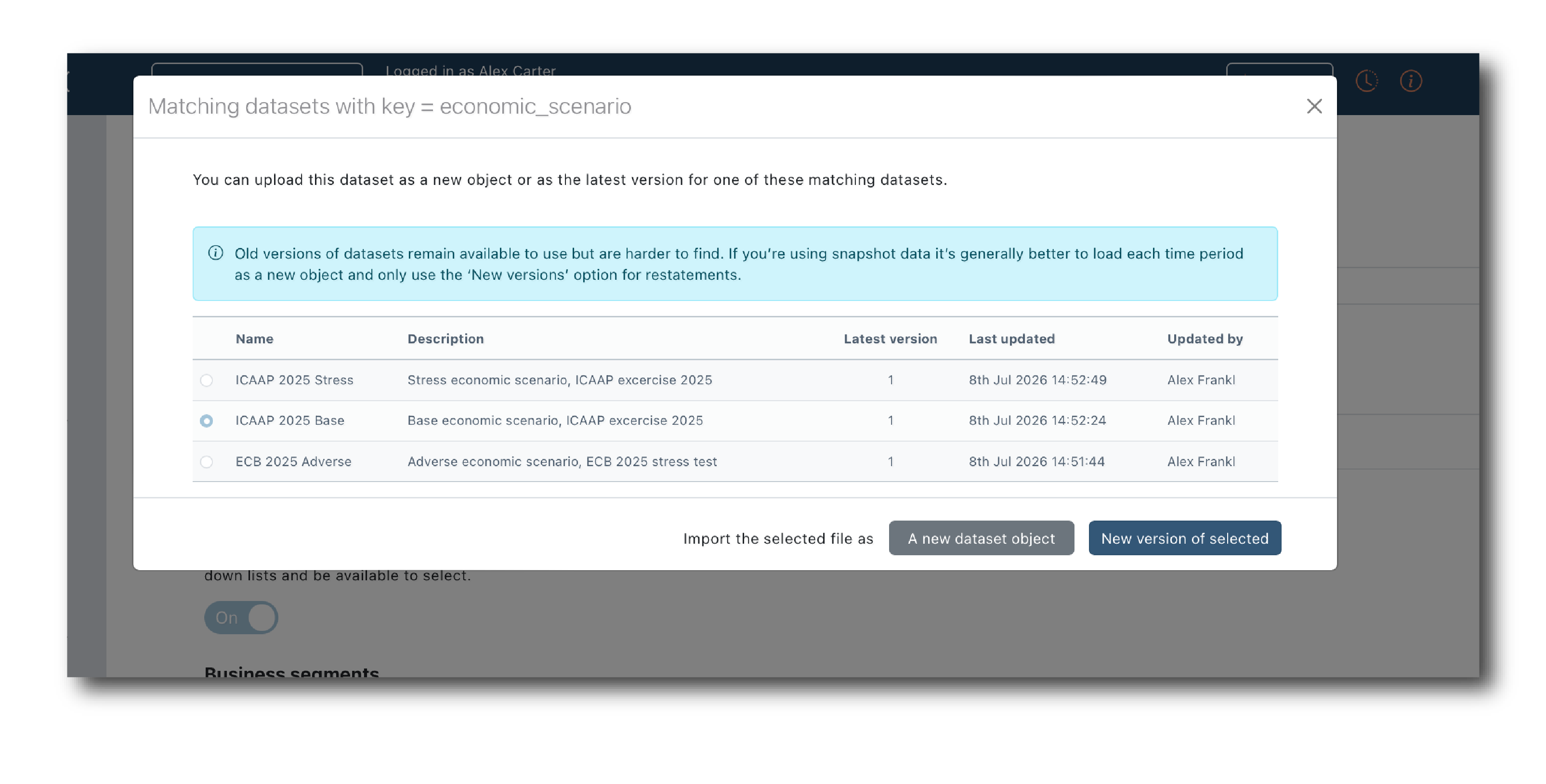
You can upload the dataset as a new data object or as a new version of an existing object. To upload as a new version of an existing object you must use the same key and same external schema object.
To upload as a new version set this toggle to on.
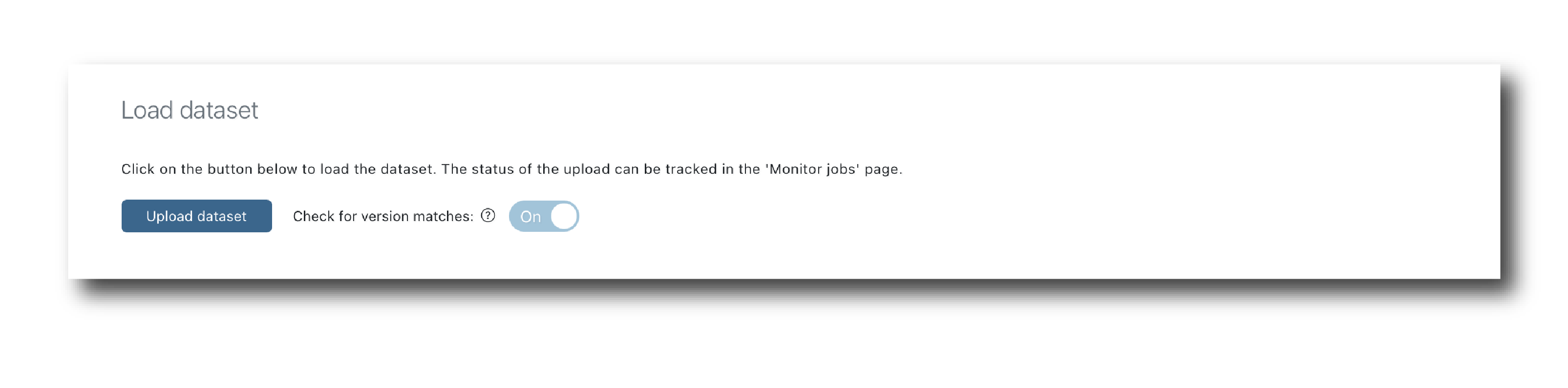
You will then be able to pick from the list of existing objects that could be versioned using this upload.
Uploading STRUCT schema data
The process is similar to tabular data but trac cannot infer a schema from the imported file, so first create a schema.
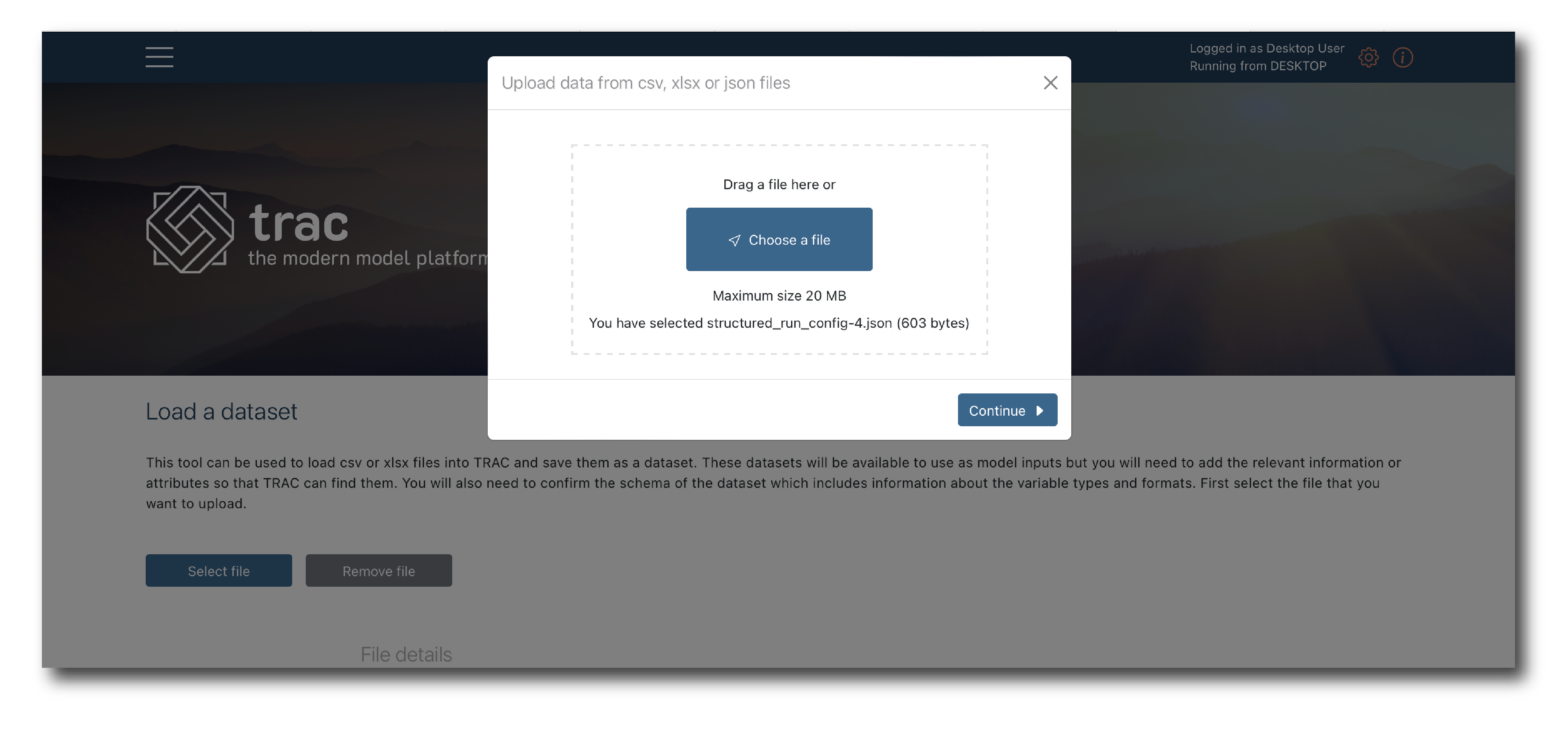
Select the json file containing the structured data you want to import, then click continue.
Select the schema object which matches the data you want to upload.
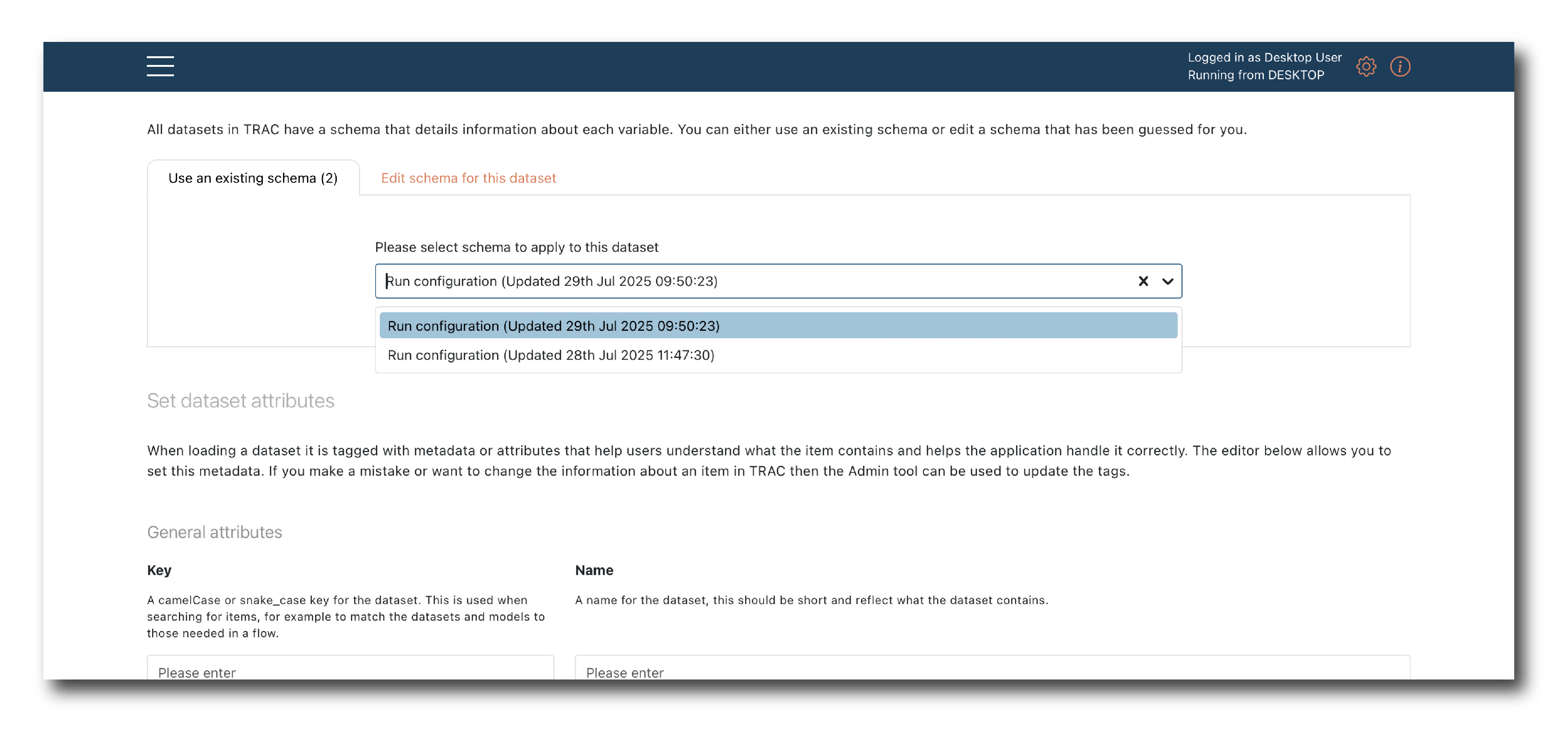
Now name and tag the object and click ‘Upload dataset’.